//读取文件的异步操作

const fs = require('fs');
const path = require('path')

// const fullFileName = path.resolve(__dirname, 'files','a.json')
// fs.readFile(fullFileName,(err,data)=>{
//     if(err){
//         console.log(err)
//         return
//     }
//     console.log(data.toString())
// })


//不用promise,用普通的callback函数,获取一个文件的内容
function getFileContent(fileName,callback){
    const fullFileName = path.resolve(__dirname, 'files',fileName)
    fs.readFile(fullFileName,(err,data)=>{
        //报错?
        if(err){
            console.log(err)
            return
        }
        //没报错,执行callback
        callback(
            //文件都是json的
            JSON.parse(data.toString())
            )
    })
}


//测试
//函数套函数,套了3层,callback回调函数
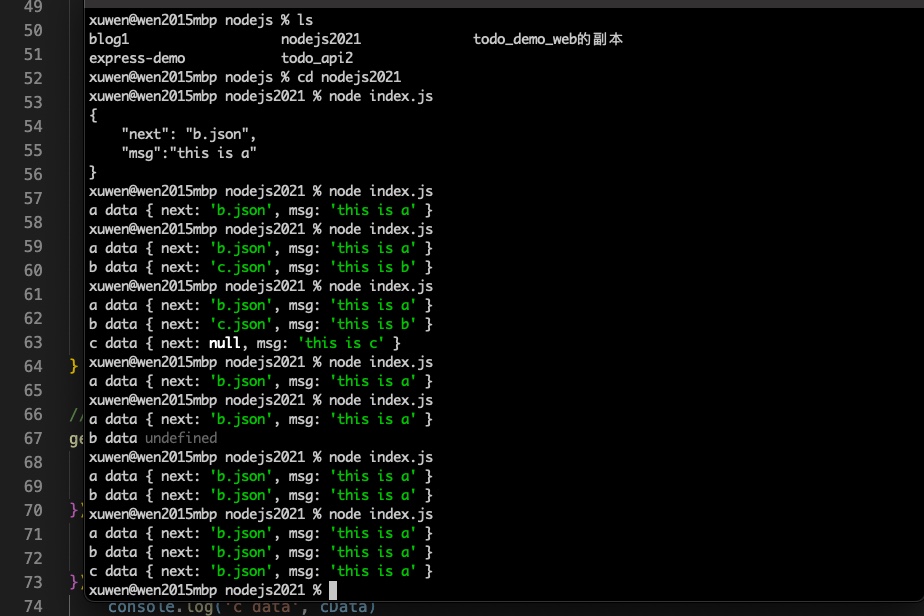
getFileContent('a.json', aData =>{
    console.log('a data',aData)
    getFileContent(aData.next, bData=>{
        console.log('b data', bData)
        getFileContent(bData.next, cData =>{
            console.log('c data', cData)
        })
    })
})


//用promise,缓和一下,回调地狱。改平铺,看起来复杂,其实好用
function getFileContent(fileName){
    const promise = new Promise((resolve,reject)=>{
        const fullFileName = path.resolve(__dirname, 'files',fileName)
        fs.readFile(fullFileName,(err,data)=>{
            //失败执行reject函数
            if(err){
                reject(err)
                return
            }
            //成功,执行resolve函数
            resolve(
                JSON.parse(data.toString())
                )
        })
    })
    return promise
}

//promise的测试
//通过next方法和.then拿到下一层数据
getFileContent('a.json').then(aData =>{
    console.log('a data', aData)
    return getFileContent(aData.next)
}).then(bData =>{
    console.log('b data', bData)
    return getFileContent(bData.next)
}).then(cData =>{
    console.log('c data', cData)
})